FULL-TIME UNDERGRADUATE PROGRAMME
FULL-TIME UNDERGRADUATE PROGRAMME – MAJOR IN MARKETING MANAGEMENT
As a long-established discipline, Marketing Management offers a specially designed curriculum aimed at equipping students with a solid foundation in market research, brand management, marketing strategy formulation, product design, pricing, distribution channel development, and integrated marketing communications. The programme also emphasises managerial thinking in organising and implementing marketing activities within organisations and enterprises.
1. Programme Objectives
1.1. General Objectives
The overarching objective of the programme is to train graduates in Marketing Management who possess sound knowledge of society, politics, and law, maintain good physical health, demonstrate strong professional competence, a high sense of responsibility, and adherence to professional ethics. Graduates are expected to perform marketing-related roles in organisations operating in both domestic and international markets.
Students are also equipped with skills and methodologies to understand customers, communicate and collaborate effectively, apply information technology, and use foreign languages—particularly English—to enhance operational effectiveness. The programme further prepares students to adapt to rapid changes in the business environment and to engage in lifelong learning.
Specifically, within three to five years after graduation, graduates are expected to have developed the competencies required to progress into the following roles:
-
Marketing Specialist (PO1): working across diverse marketing functions within organisations in interdisciplinary and multicultural environments.
-
Marketing Manager (PO2): capable of assuming middle- and senior-level marketing management positions in a globally competitive context, such as Marketing Director, Brand Director, Communications Director, Creative Director, or Sales Supervisor.
1.2. Learning Outcomes
Graduates of the Marketing Management major are equipped with the knowledge and competencies necessary to advance through various career stages, from marketing executive to middle-level marketing manager and senior marketing leadership positions (e.g. Marketing Director), at both national and international levels. These environments typically demand high professional standards and strong English proficiency.
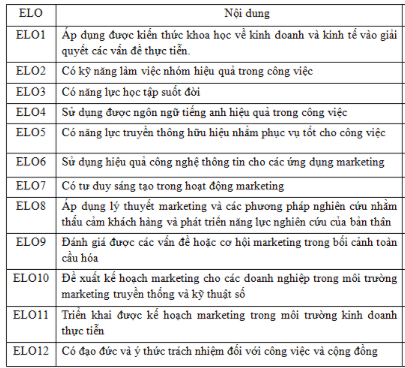
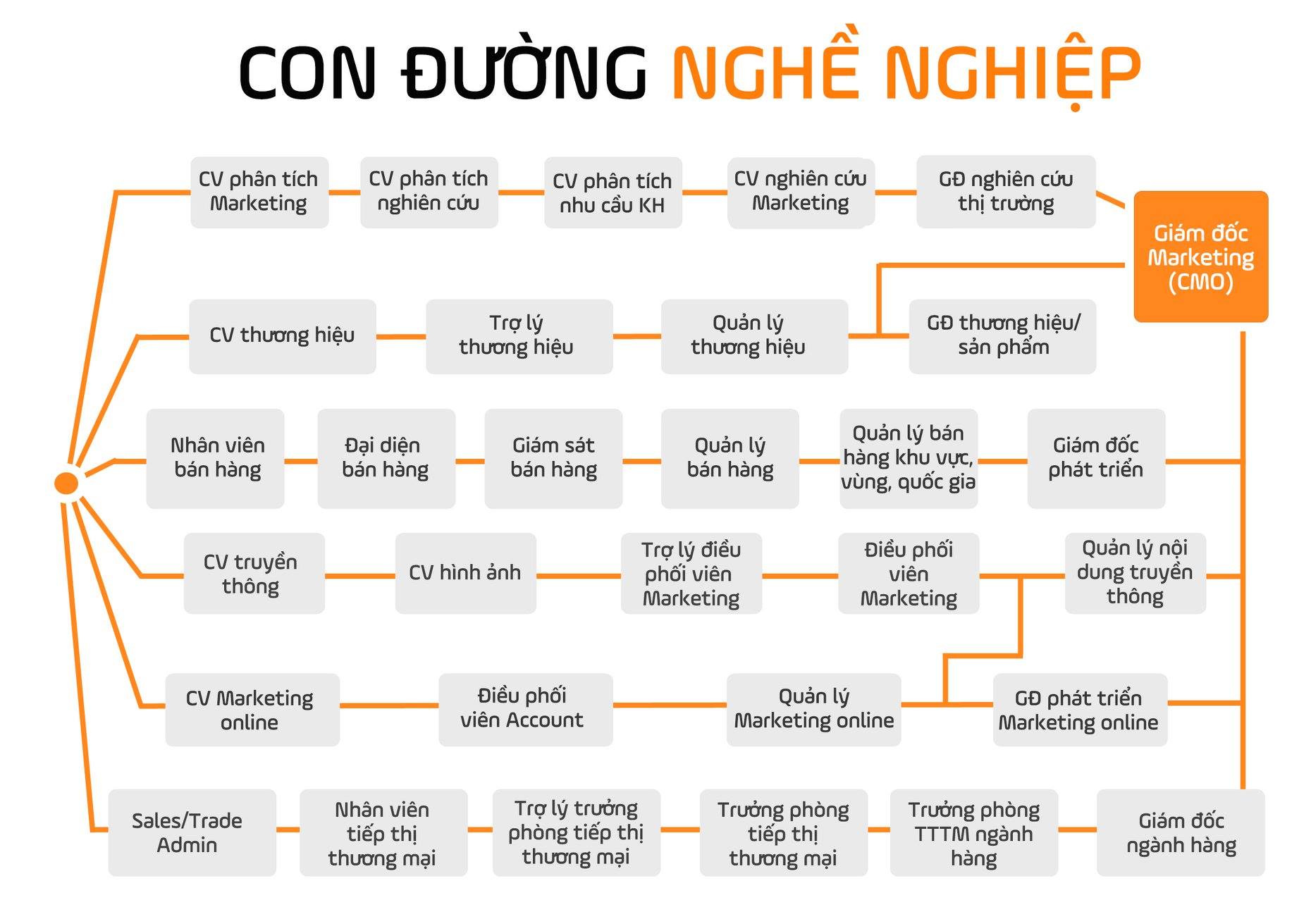
Graduates are qualified for specialised positions in the following areas:
-
Public sector and non-governmental organisations: undertaking marketing-related activities such as event organisation, market research and analysis, public relations, marketing communications programme design and management, marketing strategy, and product and brand management.
-
Enterprises and client-side organisations: performing a wide range of marketing functions in corporations, including leading multinational firms such as Unilever, P&G, Coca-Cola, and Nestlé. Positions range from marketing executives (e.g. digital marketing, market research, distribution and sales, customer service, communications) to senior roles such as Marketing Director, Sales Director, Channel Development Director, Communications Director, and Brand Director.
-
Marketing service providers (Agencies): including marketing consultancy firms; market and consumer research companies (e.g. Nielsen, FTA); and advertising and communications agencies (e.g. Ogilvy & Mather, Dentsu, Cowan).
-
Market Research: conducting research, analysis, and forecasting of market trends in specialised research firms or in-house research departments, with positions such as Market Research Director, Market Research Manager, Market Research Supervisor, and Market Analyst.
-
Product and Brand Management: managing brand activities and product development, with roles such as Brand Manager, Product Manager, and Product Development Manager.
-
Marketing Communications (Promotion): designing, implementing, and evaluating communication programmes, including advertising, sales promotion, and public relations, with positions such as Advertising Manager, Advertising Sales Director, Public Relations Specialist, Public Relations Director, and Corporate Communications Manager.
-
Distribution and Marketing Channels: managing distribution channels and supply activities to ensure effective delivery of products to consumers, including roles such as Channel Development Director, Horeca Channel Manager, Modern Trade (MT) Channel Director, and Trade Marketing Manager.
-
Sales and Online Marketing: managing sales forces, direct selling, online and digital marketing activities, with positions such as Sales Director, Sales Representative, and Sales Executive.
-
Pricing: developing and adjusting pricing policies, including selling prices, discount structures, and promotional pricing.
-
Event Management: designing and managing communication programmes and events, with roles such as Event Planner and Event Management Specialist.
-
Customer Service and Customer Relationship Management: designing and delivering customer services, managing customer relationships, and overseeing customer care operations, with positions such as Customer Service Executive, Team Leader, Supervisor, and Head of Customer Service.
In addition, graduates are well prepared to pursue entrepreneurship or continue postgraduate studies in Marketing at institutions both domestically and internationally.
2. Duration of Study
The standard programme duration is four years. Depending on individual academic capacity and study conditions, students may complete the programme in as little as three years or extend their studies to a maximum of six years.
3. Total Credit Load
133 credits, excluding Physical Education and National Defence Education modules.
4. Admission Requirements
Graduates of upper secondary education or equivalent vocational secondary programmes.
5. Training Mode
Credit-based system.
6. Grading Scale
In accordance with undergraduate training regulations under the credit-based system.