DUE Students Publish Sustainable Food Consumption Research in International Journal
10/11/2026

A research paper by students from The University of Danang - University of Economics, has been published in Cleaner Waste Systems, an international scientific journal indexed in the Emerging Sources Citation Index (ESCI) and Scopus, and ranked Q2 by SCImago.
Titled “Behavioral Intention Toward Waste-to-Value Food: A Cross-Country Study of Consumers in Vietnam and the United States,” the paper appears in Volume 15 of Cleaner Waste Systems (December 2026), under DOI: 10.1016/j.clwas.2026.100588.
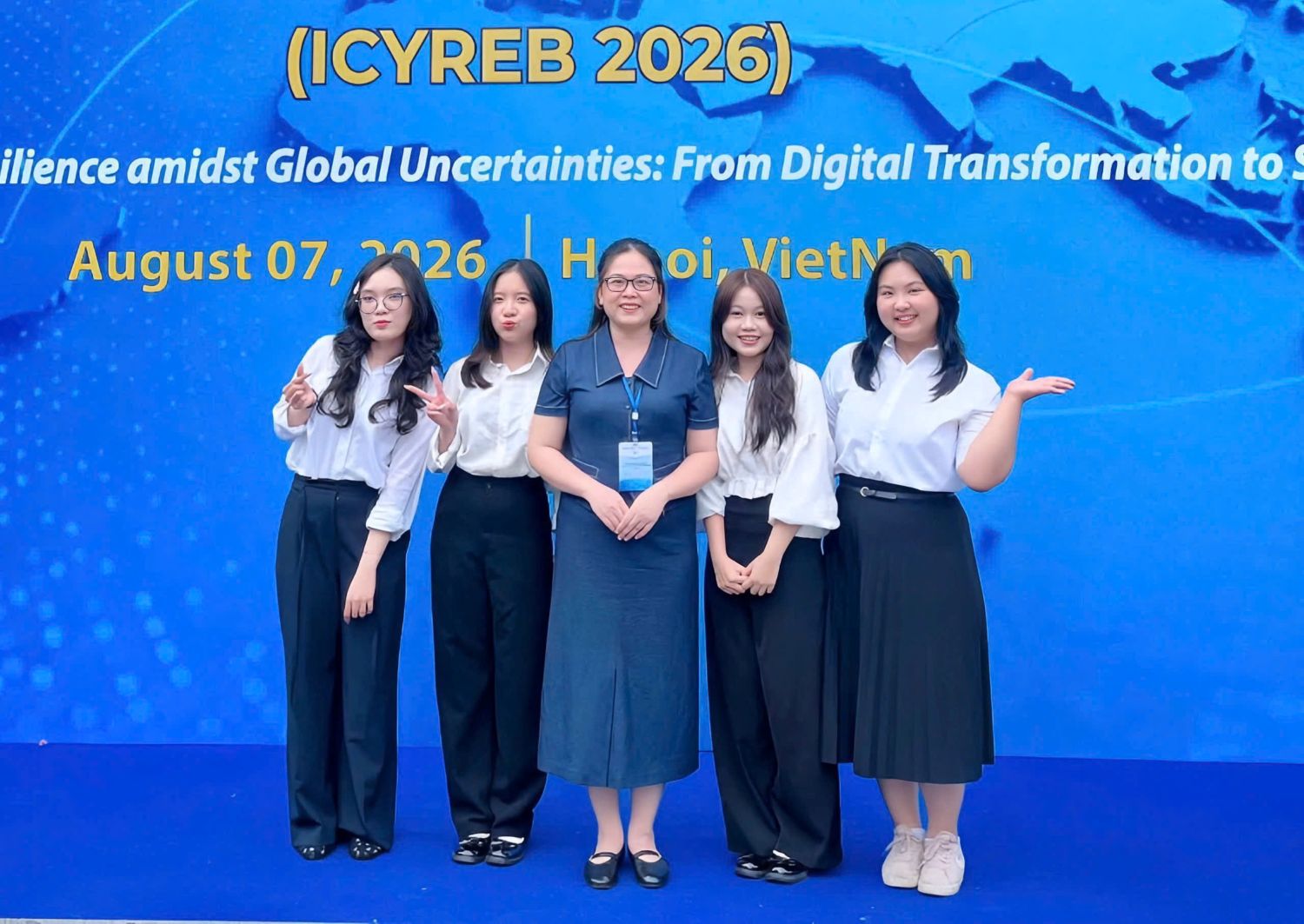
The study was conducted by a team of DUE students: Nguyen Bao Uyen (team leader), Truong Thi Minh Hau and Nguyen Hoang Yen Ngoc, from class 49K01.2, and Nguyen Phuong Uyen, from class 49K01.1. All four are International Business majors at the Faculty of Tourism and International Business. The research was supervised by Dr. Pham Thi Be Loan.
The research examines the psychological factors shaping consumers' pro-environmental behavioral intentions toward waste-to-value food in Vietnam and the United States. Waste-to-value food refers to food products developed by transforming surplus resources or materials otherwise at risk of being discarded into value-added products that meet food safety standards and are suitable for human consumption.
Drawing on the Value-Belief-Norm (VBN) theory, the study proposes an extended research model to clarify the roles of value orientations, cognitive mechanisms, anticipated emotions and personal norms in shaping pro-environmental behavioral intentions.
Specifically, it examines the direct and indirect effects of self-transcendent values and self-enhancement values through a sequential pathway involving problem awareness, ascription of responsibility, anticipated feelings of pride, anticipated feelings of guilt, and a sense of obligation to take pro-environmental actions, ultimately influencing consumers' intentions to adopt environmentally responsible behavior.
Based on a survey of 770 consumers in Vietnam and the United States, the findings identify a sense of obligation to take pro-environmental actions as the strongest predictor of pro-environmental behavioral intentions in both countries. The study also reveals differences in how value orientations influence consumers across the two markets, suggesting that the formation of sustainable consumption intentions may be shaped by national contexts.
The findings provide a basis for developing communication strategies and behavioral interventions to raise awareness of food waste, strengthen individual responsibility and encourage the consumption of waste-to-value food. These efforts could contribute to the transition towards a circular economy and broader sustainable development goals.