Workshop Shapes New Growth Drivers and Resource Strategies for Da Nang in 2026-2030 Period
17/07/2026
On July 17, 2026, the University of Economics – University of Da Nang, in collaboration with the Department of Finance, organized a workshop entitled "Shaping New Growth Drivers and Resource Strategies for Da Nang City in the 2026-2030 Period." The event served as a forum to release the Annual Report on Da Nang’s Socio-Economic Situation 2025 and to discuss solutions for mobilizing resources to realize the city’s goals of rapid and sustainable growth in the new development phase.
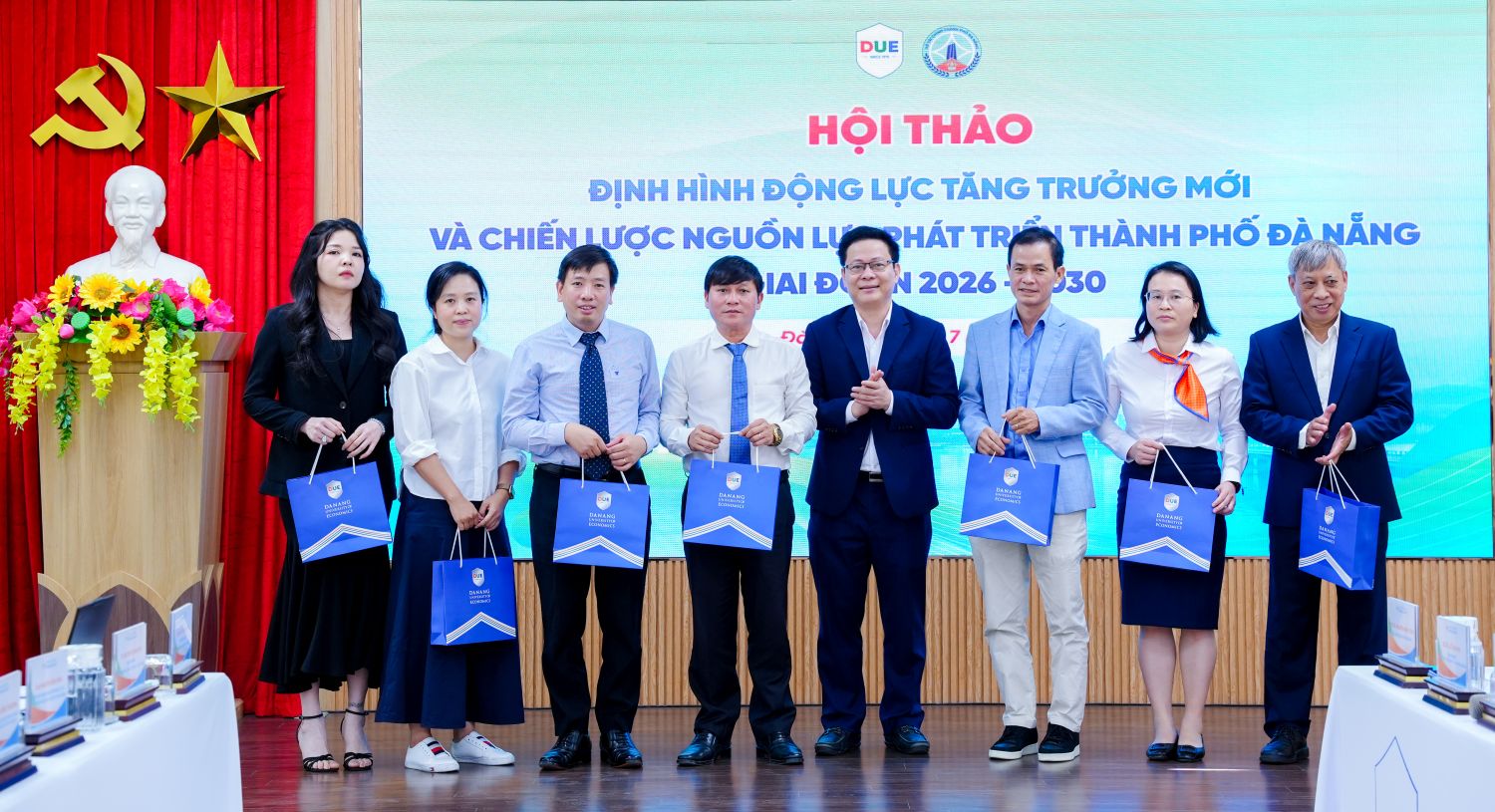
Prof. Dr. Le Van Huy, Rector, presents gifts to speakers
In his opening remarks, Assoc. Prof. Dr. Doan Ngoc Phi Anh, Vice Rector of the University of Economics, emphasized the important role of higher education institutions in scientific research, policy consultancy, and supporting local authorities in building new growth drivers as well as long-term development strategies for the city.
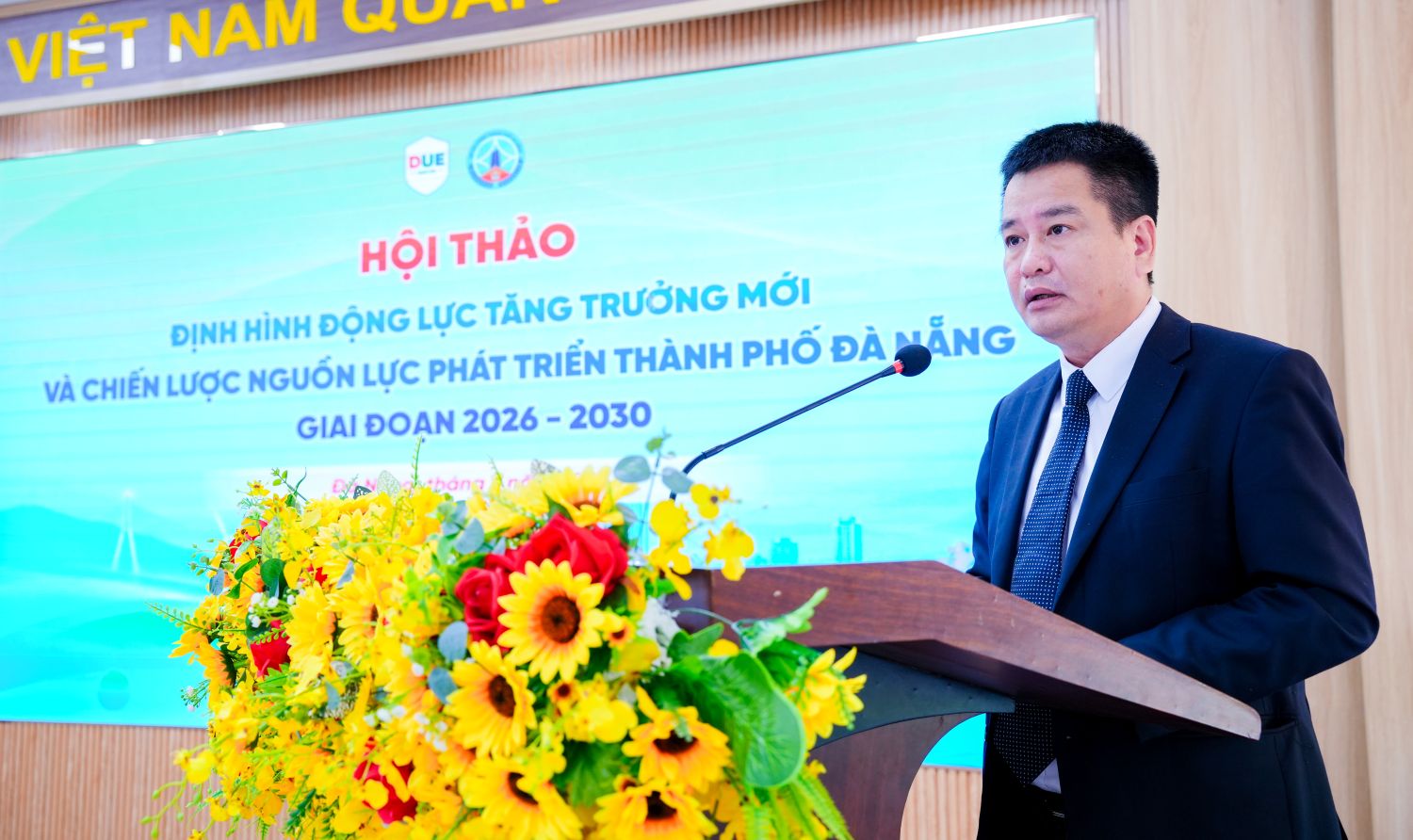
Assoc. Prof. Dr. Doan Ngoc Phi Anh delivers opening remarks at the workshop
According to the Annual Report on Da Nang’s Socio-Economic Situation 2025, the world is experiencing a period of "low growth" and "fragile equilibrium." However, Vietnam has made a remarkable breakthrough with GDP growth reaching 8.02%, among the world’s leaders. Against this backdrop, Da Nang has made a strong impression as a "new Da Nang" following the merger of two localities. The city’s GRDP growth rate reached an impressive 9.18%, ranking second among centrally governed cities in 2025. This breakthrough stems not only from the recovery of tourism but also from expectations surrounding special mechanisms for a Free Trade Zone and International Financial Center.
The report constructs a growth model based on a three-layer structure: Fundamental Growth, Institutional Growth, and Shocks. Quantitative analysis produced a key figure: Da Nang’s institutional transmission coefficient currently stands at 1.66. This means that for every 1% improvement in institutional coordination capacity, GRDP increases by 1.66 percentage points. This is a critical lever for the city’s economic breakthrough in the future. Building on this foundation, the report proposes three growth scenarios for 2026-2030:
- Scenario 1: Cautious - Actual growth of 7.70%-8.20%, relying on existing production momentum and macroeconomic stability.
- Scenario 2: Baseline - Actual growth of 8.45%-9.78%, as the city effectively operates connecting corridors and implements special mechanisms.
- Scenario 3: Ambitious - A highly aspirational target with growth of 9.46%-12.01%, requiring an FDI boom in semiconductor and artificial intelligence (AI) sectors.
The report suggests six key policy directions to realize these growth scenarios and help Da Nang’s economy reach double-digit growth:
1. Reorganize growth spaces: Shift to a multi-centered model along the Lien Chieu Port - Core Urban - Chu Lai corridor. The urban core will serve as a high-end service hub, while southern and western areas will focus on industry and logistics.
2. Stabilize and grow investment capital flows: Completely resolve bottlenecks in land procedures and site clearance to ensure no delays in strategic projects.
3. Upgrade institutional coordination: Build mechanisms linking regional planning and investment to reduce coordination costs and turn regional connectivity into a direct growth driver.
4. Make breakthroughs in human resources: Strongly shift to advanced skills and STEM workforce training to absorb semiconductor and AI technologies.
5. Deepen economic restructuring: Boost the digital economy to reach 35-40% of GRDP, with smart logistics and digital finance as spearheads.
6. Foster sustainable revenue sources: Restructure the budget, raise the share of development investment to over 35%, and deploy new tools such as carbon credit exchanges.
Within the framework of the workshop, experts and scholars presented three in-depth reports focusing on key aspects of the city’s development strategy:
- The report "Framework for Allocating and Coordinating Investment Resources According to New Growth Drivers in Da Nang, 2026-2030, Vision to 2050" presented by Dr. Nguyen Hoang Ha, Da Nang Institute for Socio-Economic Development.
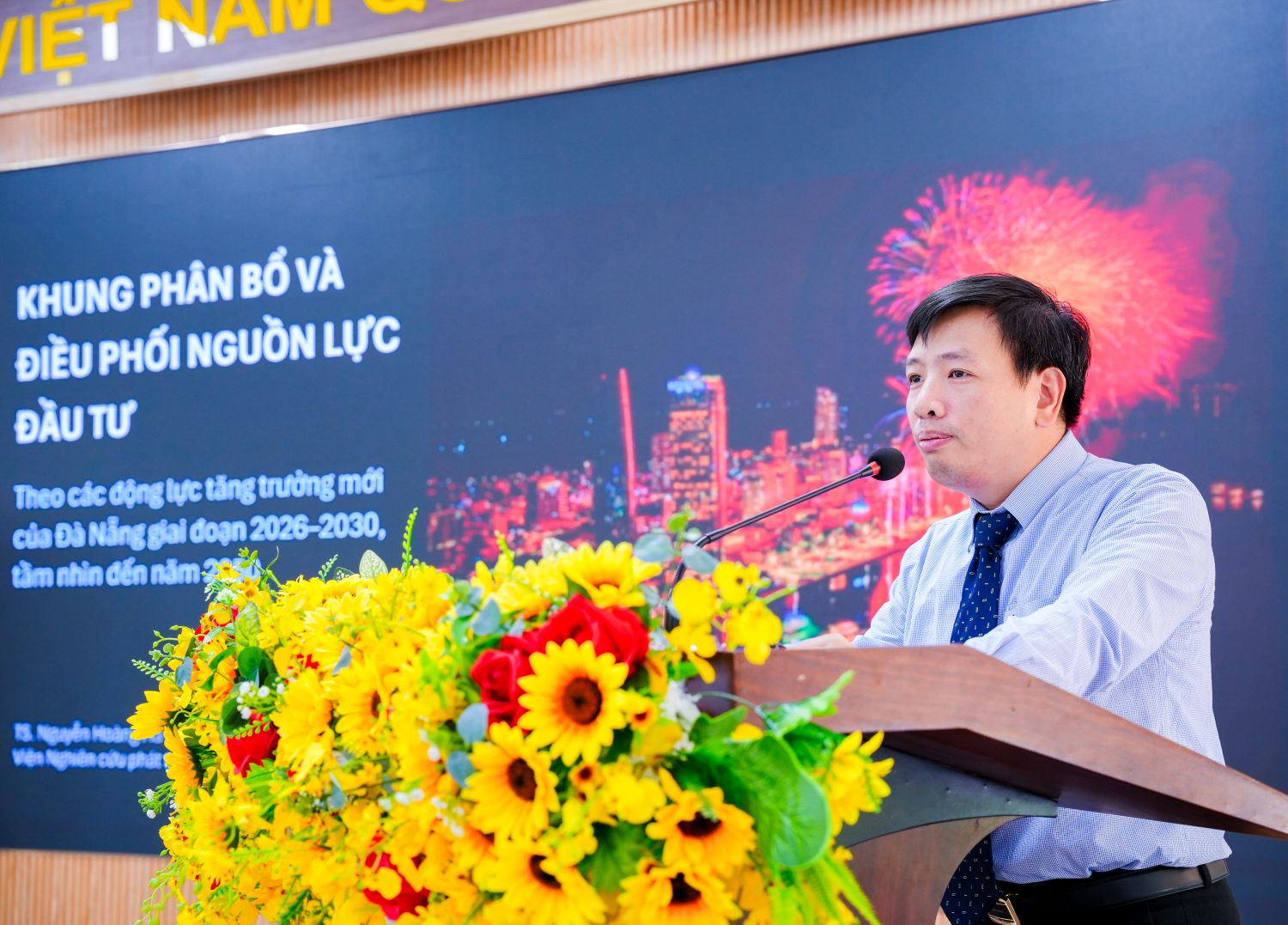
Dr. Nguyen Hoang Ha presents his report
- The report "Investment Resources for Da Nang’s Development, 2026-2030, Vision to 2050: Potential, Structure, and Mobilization Mechanisms" presented by MSc. Tran Nhu Quynh, Da Nang Institute for Socio-Economic Development.
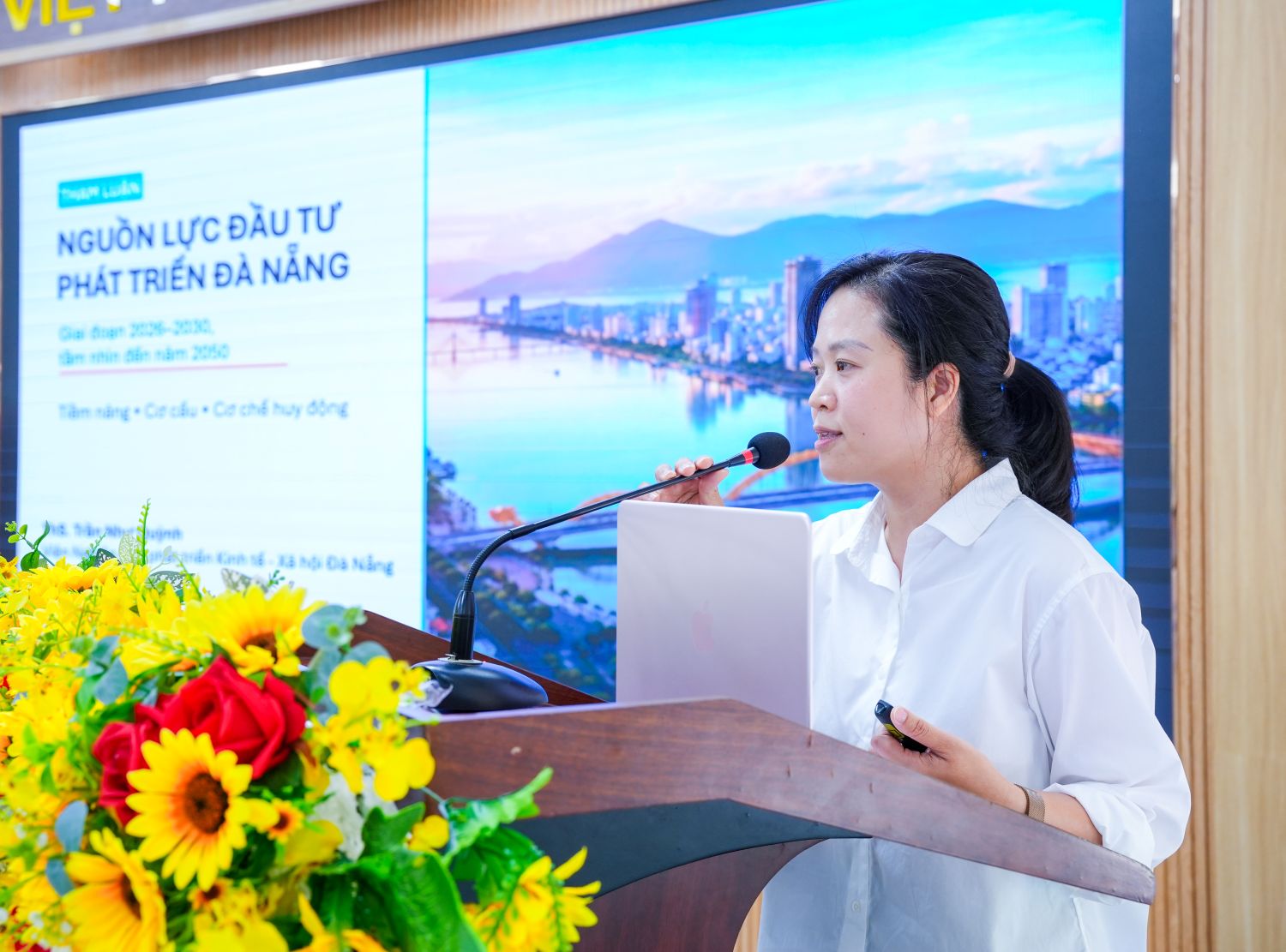
MSc. Tran Nhu Quynh presents her report
- The report "Estimating Capital Demand for Achieving Over 10% GRDP Growth in Da Nang, 2026-2030: Implications for Resource Mobilization" presented by Assoc. Prof. Dr. Bui Quang Binh, University of Economics – University of Da Nang.
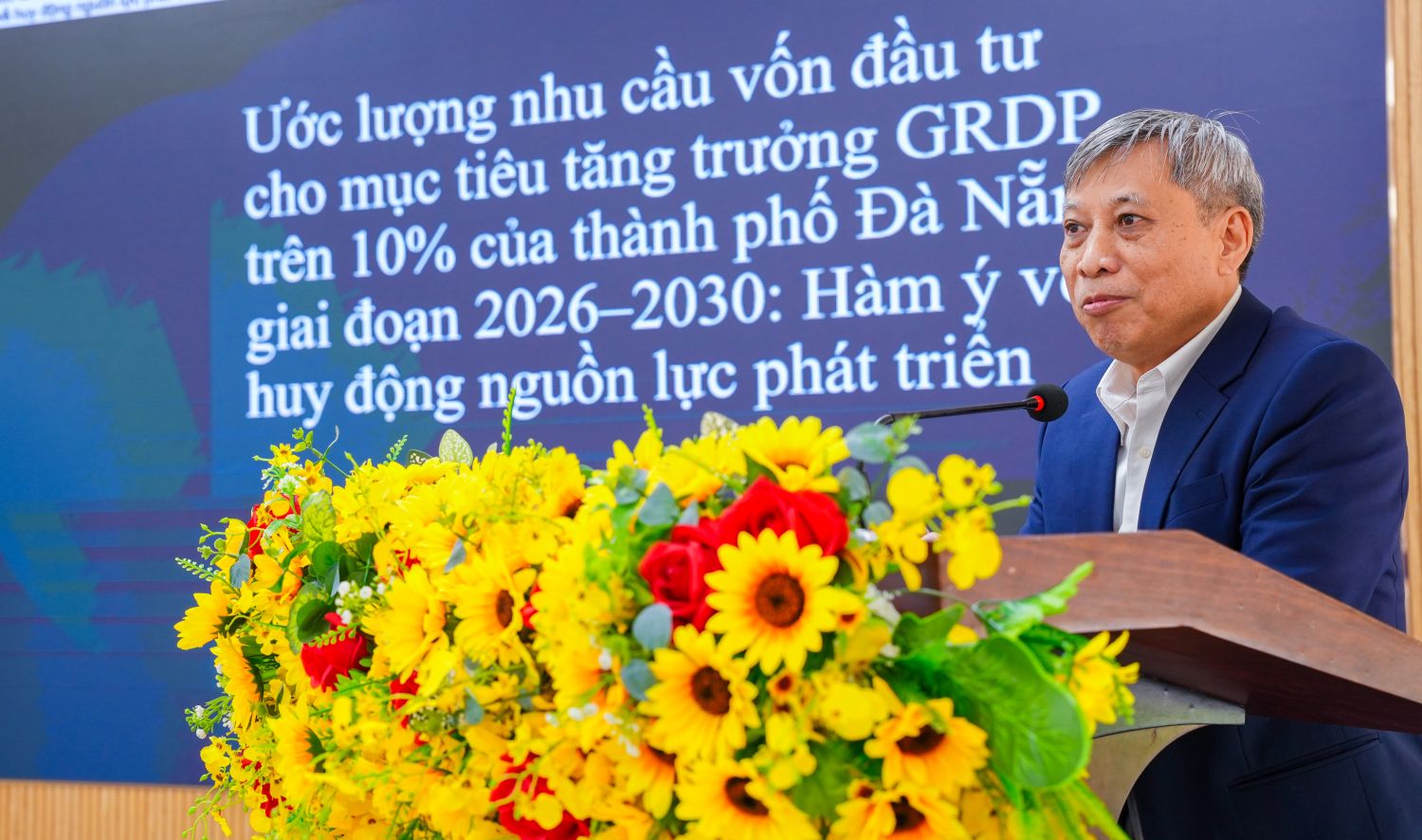
Assoc. Prof. Dr. Bui Quang Binh presents his report
At the roundtable discussion "Strategic Framework for Mobilization, Allocation, and Coordination of Investment Resources for Da Nang’s Development, 2026-2030," delegates from government agencies, universities, research institutes, and businesses discussed and analyzed key issues related to resource mobilization mechanisms, improving investment allocation efficiency, and strengthening development coordination across sectors, fields, and localities. Additionally, experts recommended prioritizing the development of high-quality human resources, innovation, and digital transformation as foundational factors to drive sustainable growth in the 2026-2030 period.
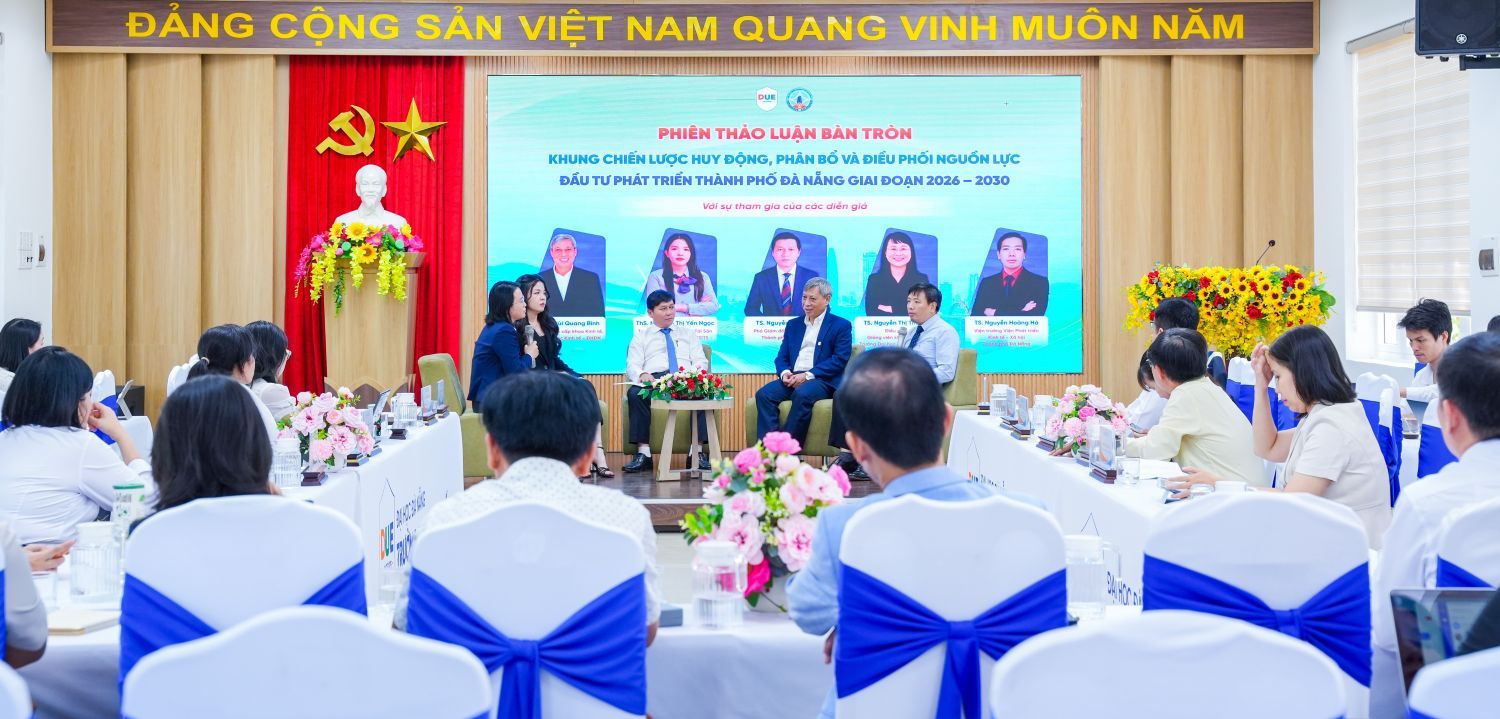
The roundtable discussion proposed multiple initiatives to create sustainable growth momentum for 2026-2030.
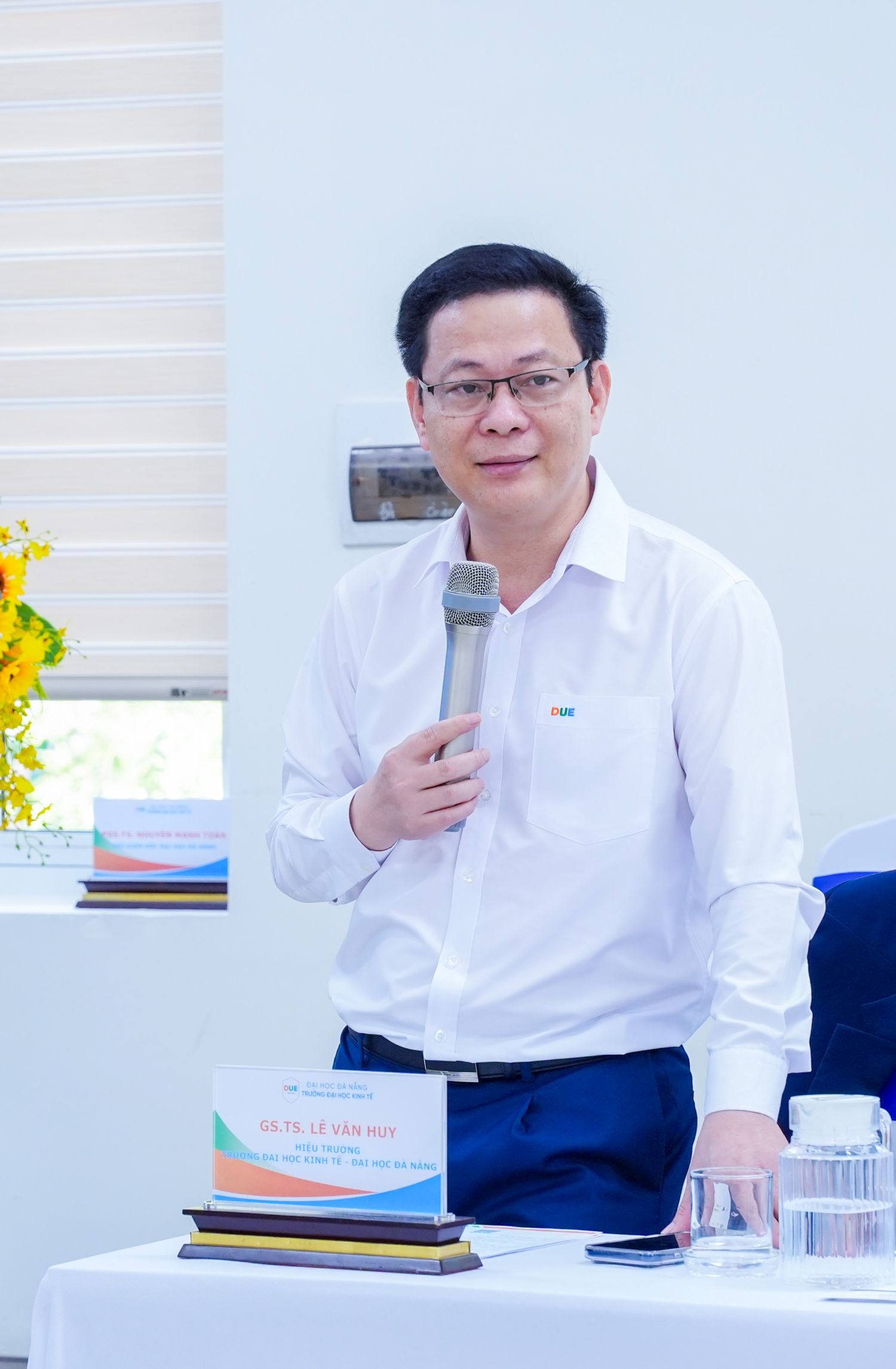
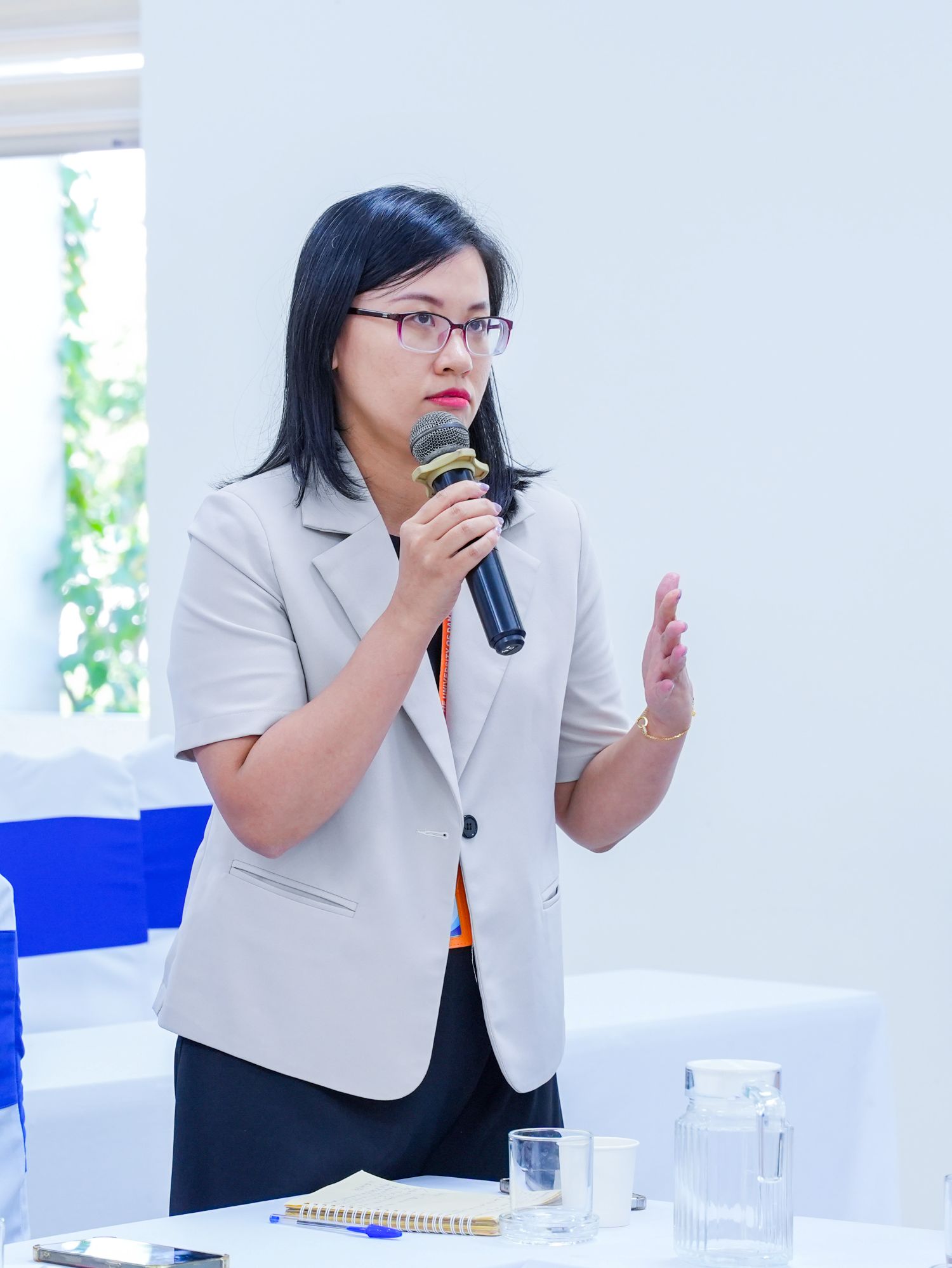
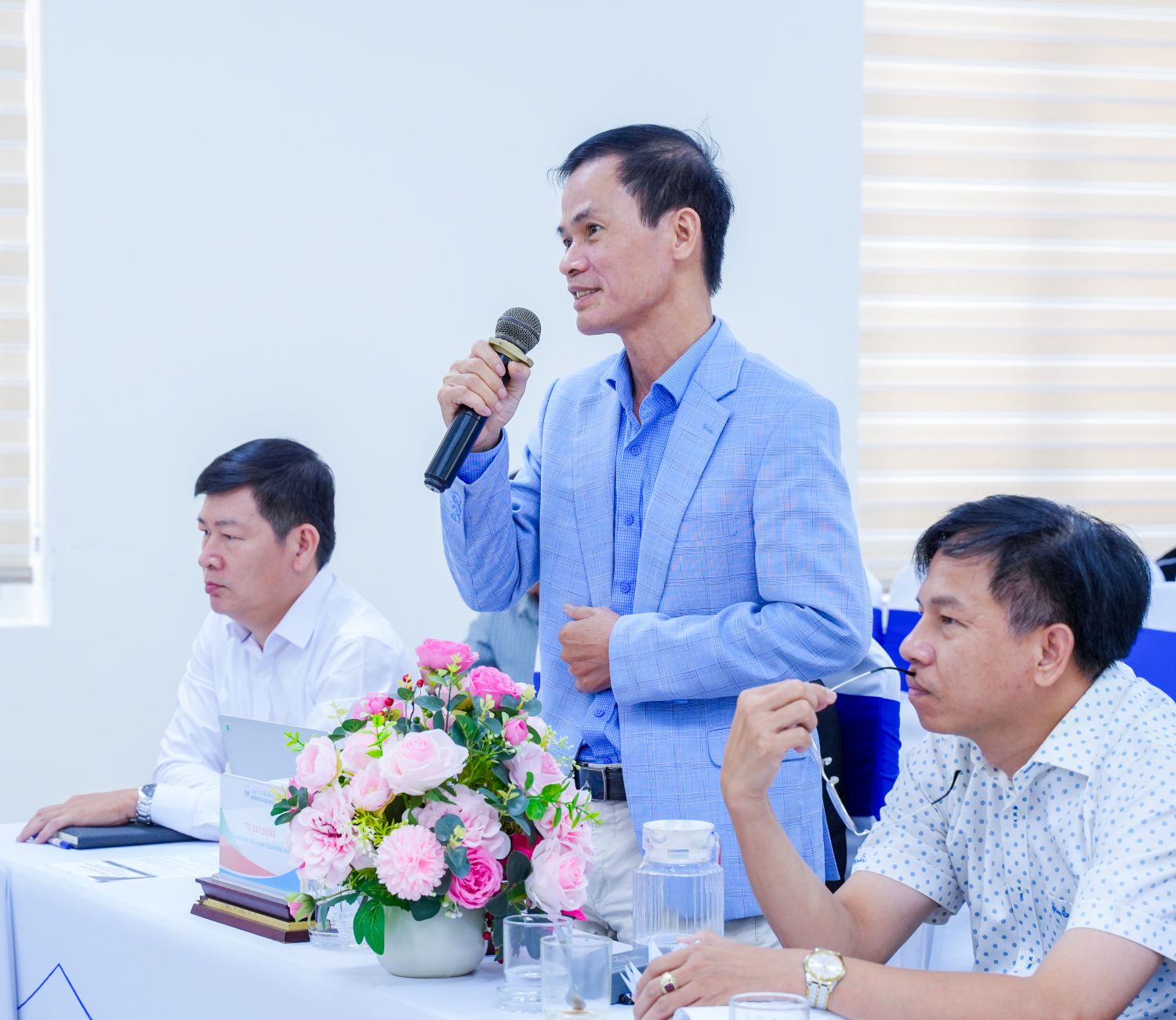
Delegates exchange views at the workshop
According to the organizers, the workshop was not only an academic forum for managers, experts, and scholars but also contributed scientific arguments for the city’s policy making. The event further affirmed the role of the University of Economics in research, policy consultancy, and fostering cooperation with agencies and organizations to promote local socio-economic development.
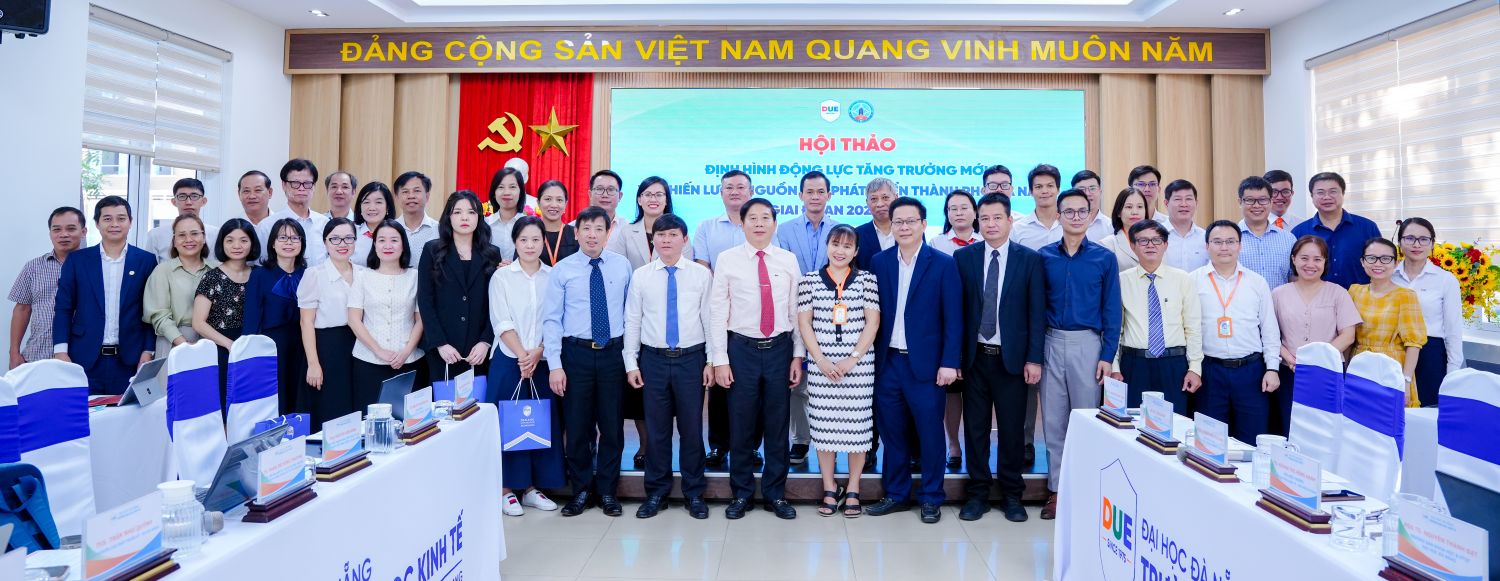
Delegates take commemorative photos